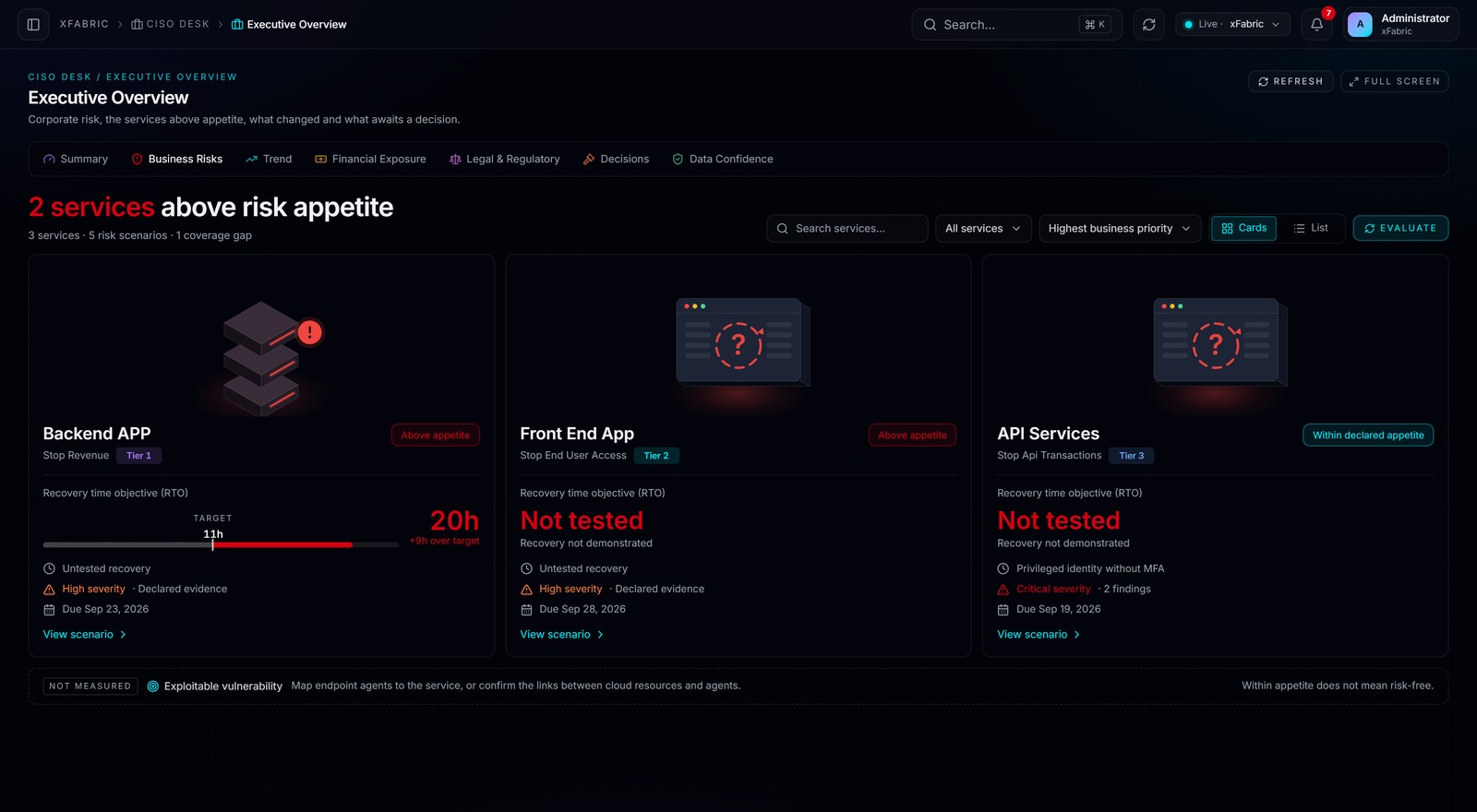
Scope against business services, not asset ranges
Programs scoped by IP range or cloud account inherit the boundaries of infrastructure history. Programs scoped by business service inherit the boundaries the executive committee already governs, which is what makes remediation decisions possible without escalation.
Practically, each scope has a named business owner, a defined dependency set, and an agreed tolerance expressed as maximum exposure-days for critical paths. That tolerance is the contract the security operation is measured against.
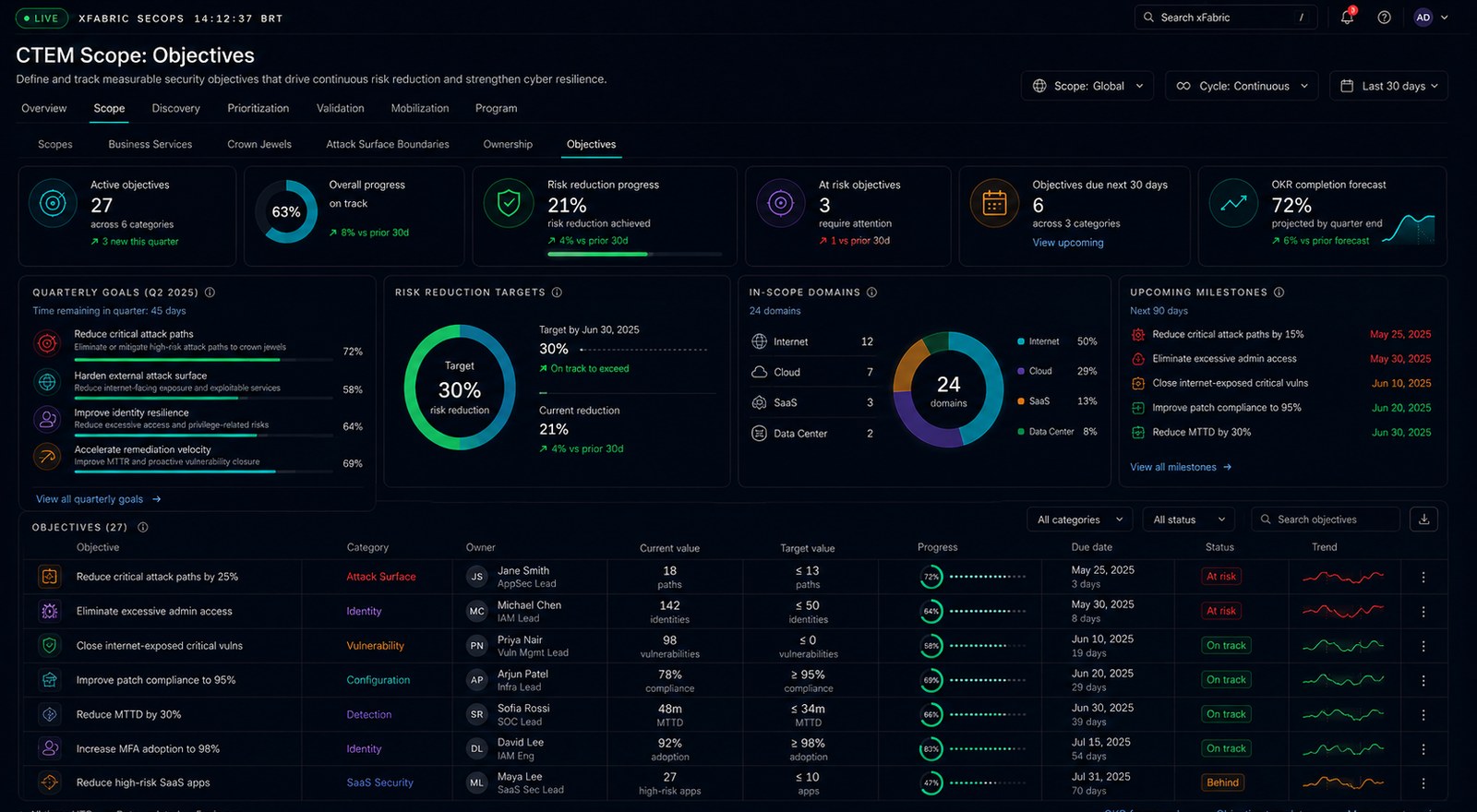
Discovery reconciliation is where credibility is won
Discovery outputs from cloud APIs, agents, network scanning and external attack surface monitoring will disagree. Publishing the disagreement — with counts, causes and resolution status — converts a political argument about data quality into an engineering task list.
Expect three recurring causes: assets outside any onboarding pipeline, ephemeral workloads whose lifetime is shorter than the scan interval, and shadow accounts created for a project that ended.
- Per-source inventory counts published weekly with variance explained
- Ephemeral workloads captured through event streams, not periodic scans
- Unowned assets escalated on a fixed clock, not on discovery
Validation: exploitability proven, not assumed
Validation answers one question: can this path be traversed in this environment today. Evidence takes three forms — safe path traversal with logged results, controlled exploitation in a mirrored environment, and adversary emulation for technique chains that cross domains.
Validation also produces the negative evidence that protects the operation's credibility: paths that theory ranks highly and validation disproves. Publishing those is what earns the right to demand action on the ones that survive.
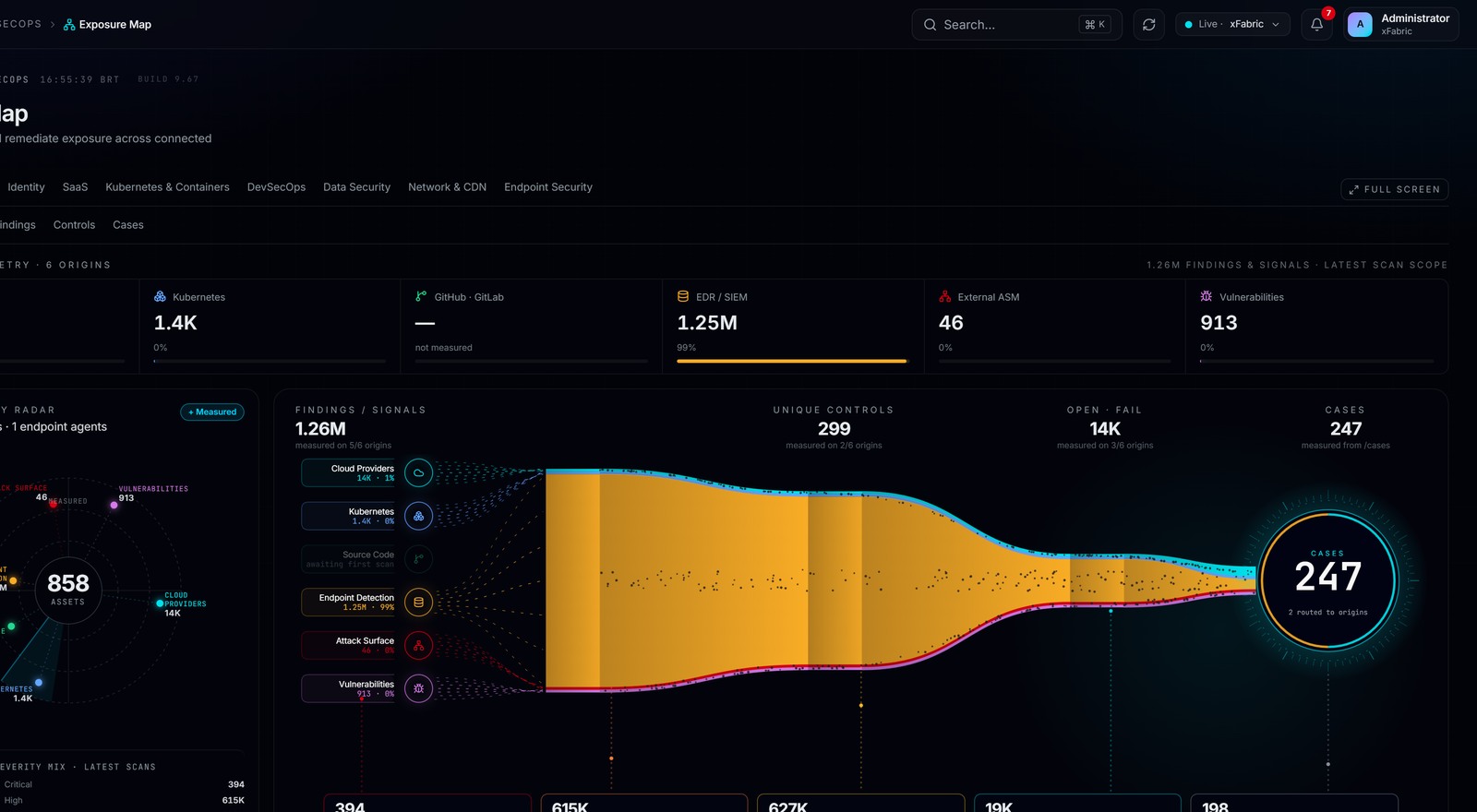
Mobilization without a parallel bureaucracy
Mobilization fails when security creates its own ticketing universe. It succeeds when exposures enter the owning team's existing backlog with the evidence, the reproduction steps, the fix, and the deadline derived from the agreed tolerance.
Two mechanisms make this durable: an automatic escalation clock tied to exposure-days, and a standing exception process with an expiry date and a compensating control that is itself monitored.
- Exposures delivered into the owning team's native backlog with full evidence
- Escalation on exposure-days, not on ticket age
- Exceptions time-boxed, with compensating controls under continuous verification
- Monthly reduction review with the business owner, not with security alone
Metrics that survive scrutiny
Report exposure-days by business service, validated-exploitable count, mean time to owner, and the ratio of exposures closed to exposures created. Volume metrics — findings raised, scans executed — describe activity, not outcome, and should not appear in an executive report.